| <symbol> ::= expression | derivation rules; a BNF specification is a set of derivation rules | |
| <symbol> | is a nonterminal variable | |
| ::= | means that the symbol on the left must be replaced with the expression on the right | |
| expression | consists of one or more sequences of either symbols or terminals. more sequences of symbols are separated by the vertical bar "|", indicating a choice, the whole being a possible substitution for the symbol on the left | |
| | | more sequences of symbols are separated by the vertical bar "|", indicating a choice, the whole being a possible substitution for the symbol on the left | |
| {terminal} | terminals are enclosed between the pair {}. They never appear on a left side. currently not elaborated | |
| ... | currently not elaborated part |
<Wheat Internals> ::= <Grain> <Root System> <Stem> <Leaves> <Inflorescence>
    <Grain> ::= <Bran Layers> ...
        <Bran Layers> ::= <Scutellum>
                          <Aleurone Layer>
                          <Endosperm>
                          <Germ (Embryo)>
                          <Husk>
                          <Coleoptile>
                          <Radicle>
                          <Plumule>
            <Scutellum> ::= <Epidermis of Scutellum>
                            <Parenchyma cells in Scutellum>
                            <Vascular tissue in Scutellum>
                            <Xylem vessels in Scutellum>
                            <Phloem cells in Scutellum>
                            <Scutellar node>
                            <Scutellar leaves>
                            <Scutellar sheath>
                            <Scutellar ligule>
                <Epidermis of Scutellum> ::= <Cuticle of Epidermis>
                                             <Epidermal Cells>
                                             <Trichomes on Epidermis>
                                             <Stomata on Epidermis>
                                             <Epidermal Tissue Layers>
                                             <Epidermal Cell Walls>
                                             <Epidermal Pigments>
                    <Cuticle of Epidermis> ::= <Epicuticular Wax Layer>
                                               <Cuticular Ridges>
                                               <Cuticular Pores>
                                               <Cuticular Transpiration Barrier>
                                               <Cuticular Papillae>
                        <Epicuticular Wax Layer> ::= <Cuticular Layer>
                                                     <Wax Layer>
                                                     <Epicuticle>
                                                     <Lipid Layer>
                            <Cuticular Layer> ::= <Cuticle Membrane>
                                                  <Exocuticle>
                                                  <Endocuticle>
                                                  <Intracuticle>
                                                  <Epidermal Barrier>
                                                  <Outer Layer>
                                <Cuticle Membrane> ::= <Epicuticle>
                                                       <Epidermal Film>
                                                       <Periderm>
                                                       <Integumentary Sheath>
                                                       <Lipid Barrier>
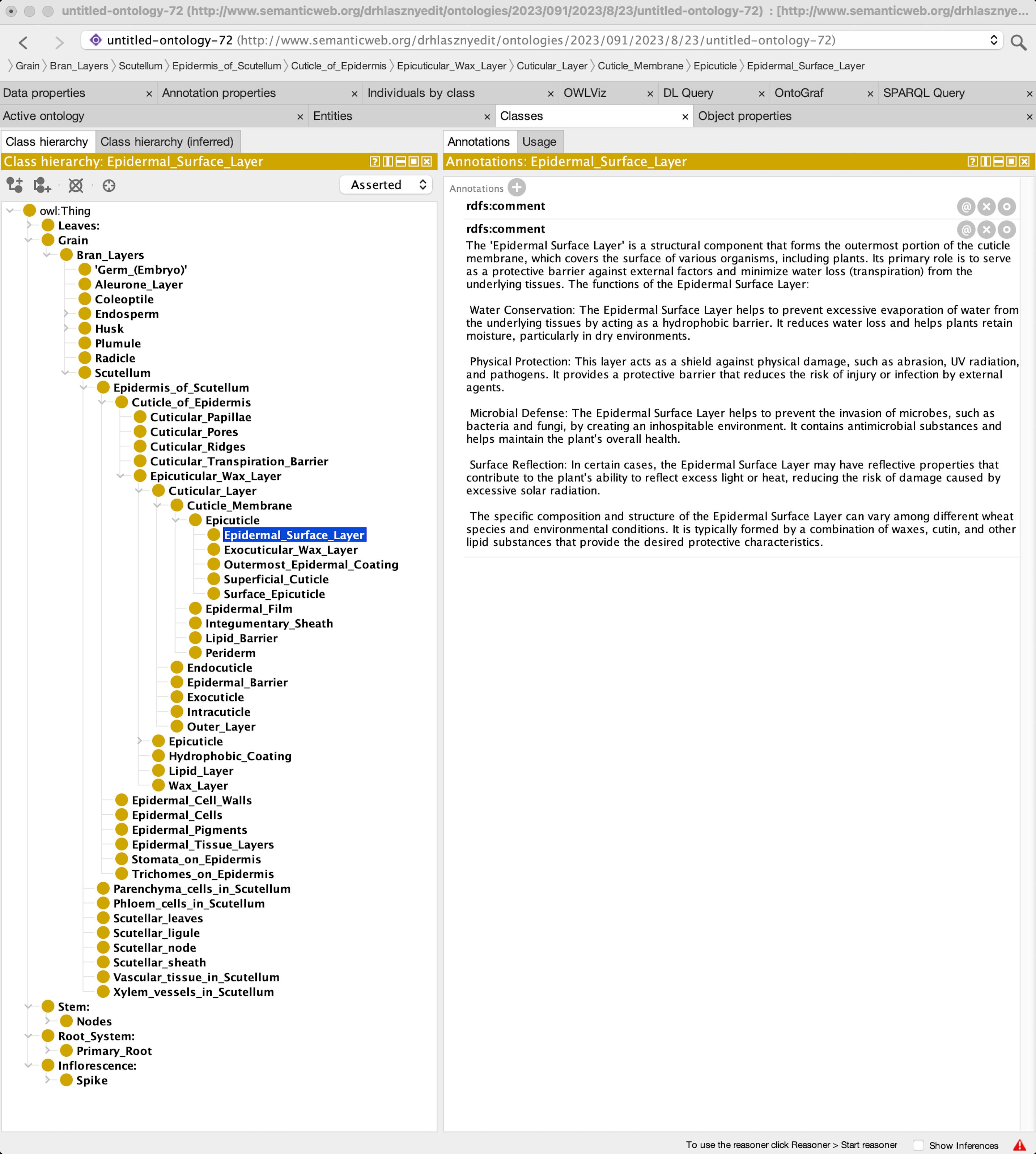
                                    <Epicuticle> ::= <Epidermal Surface Layer>
                                                     <Superficial Cuticle>
                                                     <Outermost Epidermal Coating>
                                                     <Exocuticular Wax Layer>
                                                     <Surface Epicuticle>
                                        <Epidermal Surface Layer> ::=
                                           {
                                             The "Epidermal Surface Layer" is a structural component
                                             that forms the outermost portion of the cuticle membrane
                                             which covers the surface of various organisms, including
                                             plants. Its primary role is to serve as a protective
                                             barrier against external factors and minimize water loss
                                             (transpiration) from the underlying tissues.

                                             The functions of the Epidermal Surface Layer:
                                             Water Conservation - the Epidermal Surface Layer helps
                                             to prevent excessive evaporation of water from the
                                             underlying tissues by acting as a hydrophobic barrier.
                                             It reduces water loss and helps plants retain moisture,
                                             particularly in dry environments.

                                             Physical Protection: This layer acts as a shield against
                                             physical damage, such as abrasion, UV radiation, and
                                             pathogens. It provides a protective barrier that reduces
                                             the risk of injury or infection by external agents.

                                             Microbial Defense: The Epidermal Surface Layer helps to
                                             prevent the invasion of microbes, such as bacteria and
                                             fungi, by creating an inhospitable environment. It
                                             contains antimicrobial substances and helps maintain the
                                             plant's overall health.

                                             Surface Reflection: In certain cases, the Epidermal Sur-
                                             face Layer may have reflective properties that contribute
                                             to the plant's ability to reflect excess light or heat,
                                             reducing the risk of damage caused by excessive solar
                                             radiation.

                                             The specific composition and structure of the Epidermal
                                             Surface Layer can vary among different wheat species and
                                             environmental conditions. It is typically formed by a
                                             combination of waxes, cutin, and other lipid substances
                                             that provide the desired protective characteristics.
                                            }
                                        <Superficial Cuticle> ::= ...
                                        <Outermost Epidermal Coating> ::= ...
                                        <Exocuticular Wax Layer> ::= ...
                                        <Surface Epicuticle> ::= ...
                                    <Epidermal Film> ::= ...
                                    <Periderm> ::= ...
                                    <Integumentary Sheath>
                                    <Lipid Barrier>
                                <Exocuticle> ::= ...
                                <Endocuticle> ::= ...
                                <Intracuticle> ::= ...
                                <Epidermal Barrier> ::= ...
                                <Outer Layer> ::=
                            <Wax Layer> ::= ...
                            <Epicuticle> ::= ...
                            <Lipid Layer> ::= ...
                            <Hydrophobic Coating>
                        <Cuticular Ridges> ::= ...
                        <Cuticular Pores> ::= ...
                        <Cuticular Transpiration Barrier> ::= ...
                        <Cuticular Papillae> ::= ...
                    <Epidermal Cells> ::= ...
                    <Trichomes on Epidermis> ::= ...
                    <Stomata on Epidermis> ::= ...
                    <Epidermal Tissue Layers> ::= ...
                    <Epidermal Cell Walls> ::= ...
                    <Epidermal Pigments> ::= ...
                <Parenchyma cells in Scutellum> ::= ...
                <Vascular tissue in Scutellum> ::= ...
                <Xylem vessels in Scutellum> ::= ...
                <Phloem cells in Scutellum> ::= ...
                <Scutellar node> ::= ...
                <Scutellar leaves> ::= ...
                <Scutellar sheath> ::= ...
                <Scutellar ligule> ::= ...
            <Aleurone Layer> ::= ...
            <Endosperm> ::= ...
            <Germ (Embryo)> ::= ...
            <Husk> ::= ...
            <Coleoptile> ::= ...
            <Radicle> ::= ...
            <Plumule> ::= ...
    <Root System> ::= <Primary Root> <Stem> <Leaves> <Inflorescence> <Grain>
        <Primary Root> ::= <Lateral Roots> <Root Hairs>
            <Lateral Roots> ::= ...
            <Root Hairs> ::= ...
    <Stem> ::= <Nodes> ...
        <Nodes> ::= <Internodes> <Leaf Sheath>
            <Internodes> ::= ...
    <Leaves> ::= <Leave> | <Leaves> <Leave>
        <Leave> ::= <Blade> ...
            <Blade> ::= <Midrib> <Leaf Sheath>
                <Midrib> ::= ...
                <Leaf Sheath> ::= ...
    <Inflorescence> ::= <Spike> | <Inflorescence> <Spike>
        <Spike> ::= <Rachis> ...
            <Rachis> ::= <Spikelets>
                <Spikelets> ::= <Florets> <Glumes>
                    <Florets> ::= <Lemma> <Palea> <Stamen> <Pistil>
                    <Glumes> ::= ...
Creating OWL Ontology with Protégé
Development stages
- The initial step involves creating a class structure based on the developed Backus-Naur Form (BNF) file.
- Next, the selection of appropriate annotation properties takes place, including the creation of new ones. Additionally, object properties, data properties, and individuals are prepared in this step.
- After the above steps, the annotations are filled and the appropriate relations are established.
- Reasoning is performed based on the established relations, and the consequences of the reasoning are examined.
- The generated OWL/RDF file is exported and then loaded into a GraphDB, which serves as the storage for the ontology.
- Finally, test SPARQL queries are written to test the functionality and effectiveness of the ontology system. These queries are used to validate the accuracy and efficiency of the implemented ontology.
 Existing Wheat-related Ontologies
There are currently seven existing ontologies pertaining to wheat;
however, none of them provide comprehensive information regarding
the anatomical, and micro anatomical aspects of the plant. It is
worth noting that several of these ontologies have not been updated
for a considerable period of time, while others still remain in
their rudimentary, preliminary states.
Existing Wheat-related Ontologies
There are currently seven existing ontologies pertaining to wheat;
however, none of them provide comprehensive information regarding
the anatomical, and micro anatomical aspects of the plant. It is
worth noting that several of these ontologies have not been updated
for a considerable period of time, while others still remain in
their rudimentary, preliminary states.
The following table offers a concise overview (detailed metrics) of these ontologies.